
Laundry system
A practical system for clean clothes, outgrown clothes, linens, towels, returns, and the laundry piles that never seem fully done.
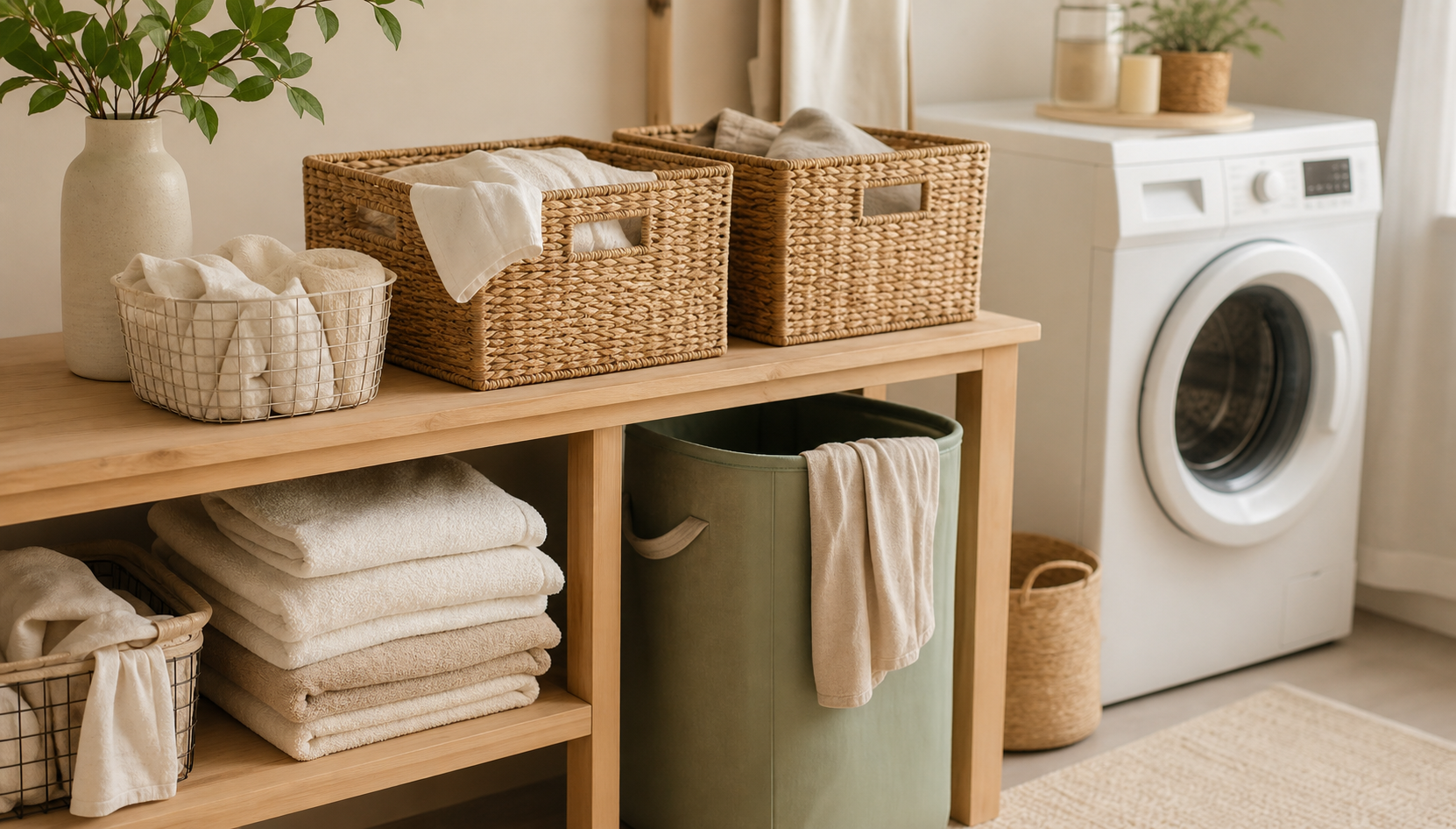
Laundry clutter is usually a flow problem.
Clothes spread when there is no clear place for each stage: dirty, washing, drying, folding, putting away, donating, storing, and returning. One basket cannot solve every stage.
A laundry landing zone gives the in-between items a home, so they stop living on chairs, stairs, beds, counters, and the top of the dryer.
The laundry categories that need homes
- Clean clothes waiting to be put away.
- Outgrown clothes waiting for donation or storage.
- Linens and towels that need a shelf or bin.
- Single socks and items needing repair.
- Backstock: detergent, dryer sheets, stain spray, refills.
Set up the landing zone
This is the holding place, not the permanent home.
Put away, donate, store, repair, or wash again.
One bin per job. No mixed mystery bins.
The landing zone should move decisions forward, not become long-term storage.
The mistake that keeps laundry loud
The most common mistake is folding everything without creating a next step. Folded piles still ask for attention if there is no system for where they go next.
A calmer laundry rhythm
Instead of trying to finish all laundry perfectly, build a repeatable path. Dirty to wash. Dry to fold. Fold to room. Outgrown to donation. Linens to one shelf. The calmer home comes from fewer stuck stages.
Laundry storage needs one job per container.
Lidded bins, soft baskets, or a slim cart work best when each one holds a clear category.
See laundry zone findsFree printable
Start with one calm reset.
Download the free 7-Day Calm Home Reset Checklist and choose one small zone instead of trying to fix the whole house at once. After signing up, check your inbox, spam, promotions, or updates folder.
Leave a Reply