
Sentimental clutter
How to Declutter Gifts Without Guilt
Keeping a gift is not the same as keeping a relationship. This gentle framework helps you protect the memory, respect the giver, and release objects that no longer support your home.
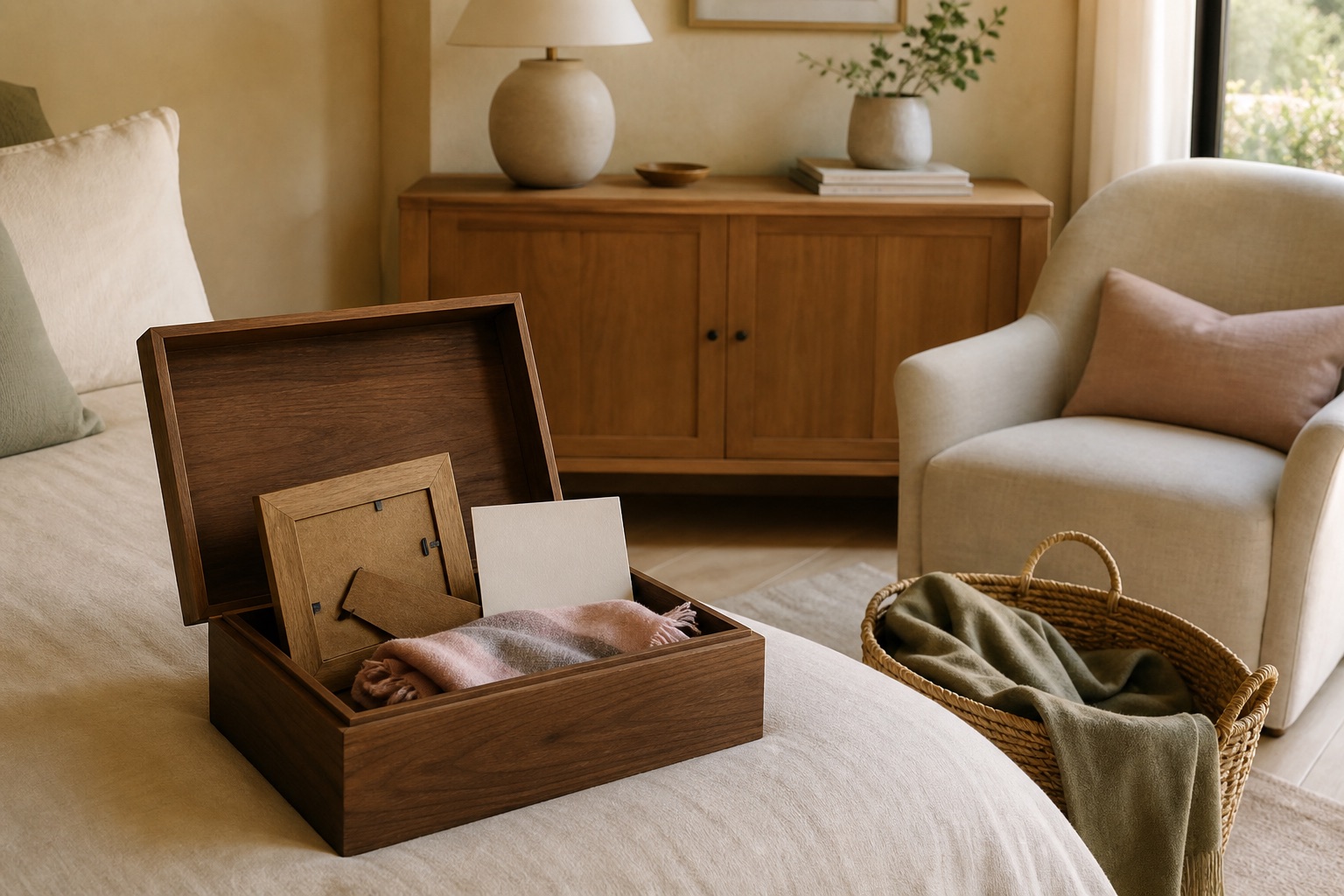
A gift completes its job when it is given.
After that moment, the object becomes part of your home. You are allowed to decide whether it still fits your space, your routines, and the season your family is living in now.
Guilt makes this decision feel like a judgment about the giver. But releasing an object does not erase affection, gratitude, or history. It only changes what your home is responsible for storing.
Ask what you are really afraid of losing
Before deciding, name the fear beneath the object. Are you afraid of forgetting the person? Appearing ungrateful? Wasting money? Regretting the decision? Hurting someone if they notice?
When the fear is clear, you can protect what matters without automatically keeping the item.
Use five gentle options
The object is meaningful, useful, or genuinely beautiful to you. Give it a real home instead of leaving it in storage.
Choose one keepsake box, shelf, or drawer. A physical limit helps you select the most meaningful pieces.
Take one clear photograph and write a sentence about the memory. Keep the story without keeping the volume.
Ask a relative whether they would value the object, without transferring guilt or obligation.
Donate, recycle, or dispose of the item. A quiet thank-you can mark the end of its role in your home.
Do not begin with the most emotional box
Practice on easier gifts first: duplicates, items that never suited you, things that are broken, and objects tied to mild rather than intense emotion. Decision confidence grows through smaller choices.
If grief is fresh or the decision feels destabilizing, pause. Decluttering is not an emergency. Place the item in a dated reconsider box and return to it in three or six months.
Choose the memory you want to keep
For an inherited collection, select the one piece that best represents the person or story. Use it, display it, or store it carefully. One chosen object often carries more meaning than a crowded box you avoid opening.
A sentence for the hard moment
Try: “I am grateful this was given to me. It has completed its role, and I can release it without releasing the relationship.”
The goal is not ruthless minimalism. It is a home where meaningful objects can be seen and cared for because they are no longer buried under obligation.
Leave a Reply