Family routines · morning route
A Kids’ Morning Routine That Needs Fewer Reminders: 6 Visible Steps From Bedroom to Door
A morning list is easier to follow when it matches the path through the home. Build six visible checkpoints, stage the handoffs, and use one next-step prompt instead of repeating the entire routine.
Build a route, not a longer list.
The goal is not a perfectly timed morning. It is a sequence that the family can see and recover when someone is tired, distracted, or moving more slowly than expected.
Start by tracing the real path from the child’s bedroom to the exit. Put each checkpoint where that action happens. If a step sends the child back across the house, either move the tool or move the step.
Choose six checkpoints from bedroom to door.
Keep the words short enough to scan. The detail belongs in the setup: clothes available, breakfast choices limited, school papers already signed, and the bag landing place ready.
Feet on the floor, curtains or light adjusted, and sleep items left in the family’s agreed resting place. Skip making the bed if it slows the essential route.
Offer the amount of choice the child can use comfortably that morning: one set staged, two options, or independent selection within a clear clothing zone.
Use the hygiene sequence your family already follows. If one part happens after breakfast, move that reminder to the later checkpoint instead of creating backtracking.
Breakfast ends with the cup, bowl, or wrapper moving to its next place. The closing action keeps the kitchen from carrying the unfinished morning.
Bring the handoff items together at one family landing point. A working family command center can hold signed papers and schedule information without becoming another display.
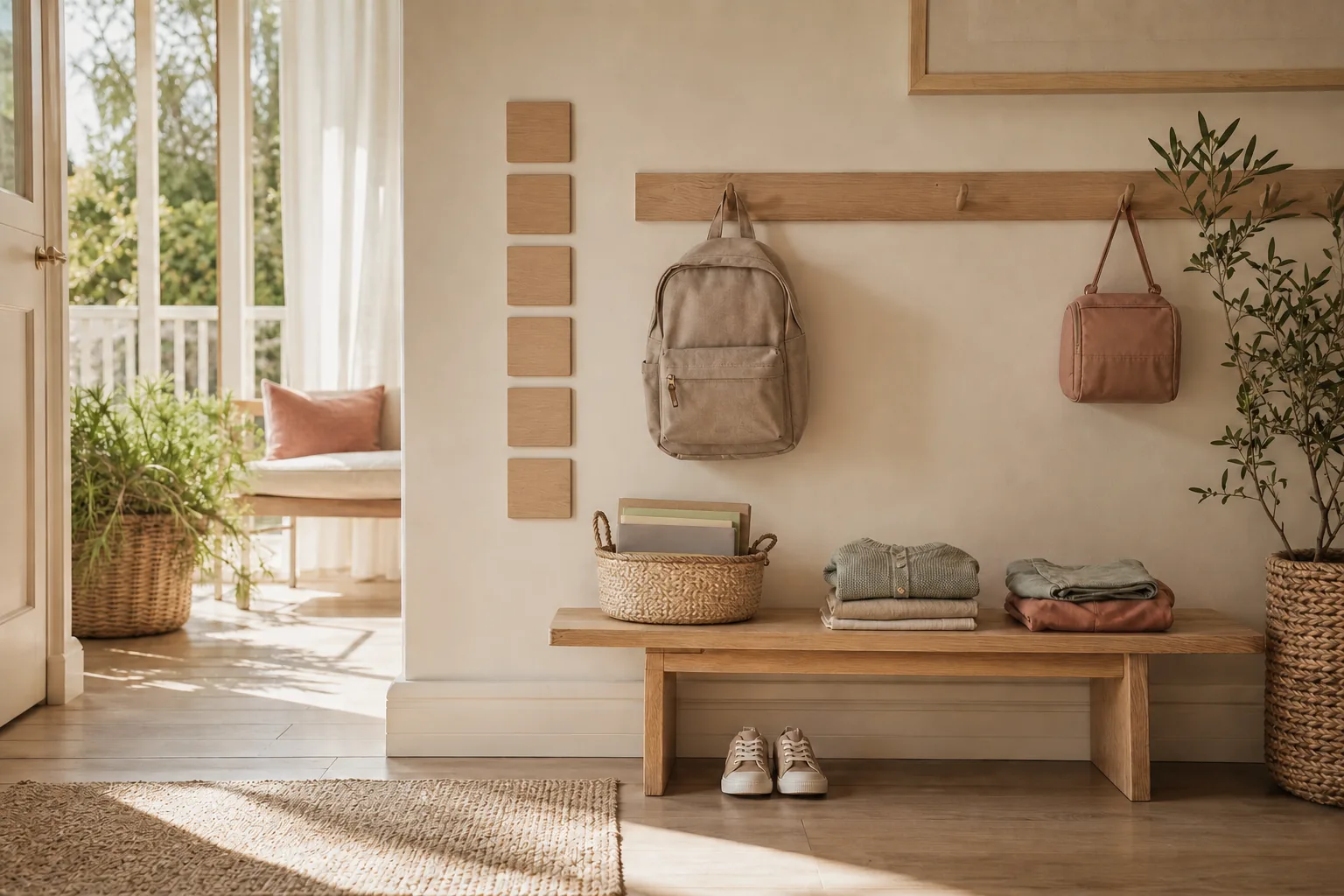
Keep the last step physically close to the exit. Add weather-specific items only when they are needed so the station stays readable.
The six-line morning checklist
Place each line at its checkpoint or keep one compact copy where the route begins.
- Wake and open the room
- Get dressed
- Bathroom basics
- Breakfast, then close it
- Bag, lunch, and papers
- Shoes, outerwear, door
Prepare the handoffs the night before.
Do not try to complete the whole morning in advance. Prepare only the points where the routine usually pauses:
- put weather-appropriate clothing where it can be reached;
- move signed papers into the bag or departure tray;
- place lunch components together according to your household’s food-storage routine;
- return shoes, bag, and outerwear to the exit zone;
- name the one morning detail that will be different tomorrow.
The Family Routines hub connects this morning route to weekly planning and other repeatable family systems.
Use one next-step prompt.
Instead of repeating all six instructions, point to the current checkpoint and ask, “What is next here?” If the answer is not visible, fix the cue before adding more reminders.
When the family is late, switch from practice mode to help mode without turning the checklist into a scorecard. The routine should support leaving the house; it should not become a new source of conflict.
Adjust the route without making it childish.
A pre-reader may use a real photograph of each destination and move with an adult. An early reader may need one or two words at each station. An older child or teen may keep only the bottleneck prompts—perhaps “paper, lunch, keys”—on the inside of a cabinet or near the exit.
Those are flexible examples, not rules. Reading comfort, mobility, shared custody, school schedule, room layout, and the child’s energy can all change the amount of support needed. Preserve the order where it helps; change it where the home requires a different route.
Review the route after one school week.
Notice where reminders still cluster. If everyone stalls at breakfast, simplify choices or prepare one component. If papers are forgotten, move the paper decision earlier and use one tray. If shoes travel through the house, move their home closer to the door.
Visit the Kids Spaces hub for more child-reachable systems. Keep the route only as detailed as it needs to be; once a step happens reliably, the visible prompt can become smaller or disappear.
Leave a Reply