Kids spaces
Kids spaces that are easier to reset.
Toy storage, kids rooms, backpacks, lunchboxes, nursery zones, and daily clutter systems for family homes that are used hard every day. The goal is not a perfect playroom. The goal is a reset your family can repeat.
Pressure points
Start with the kid-space problem you keep resetting over and over.
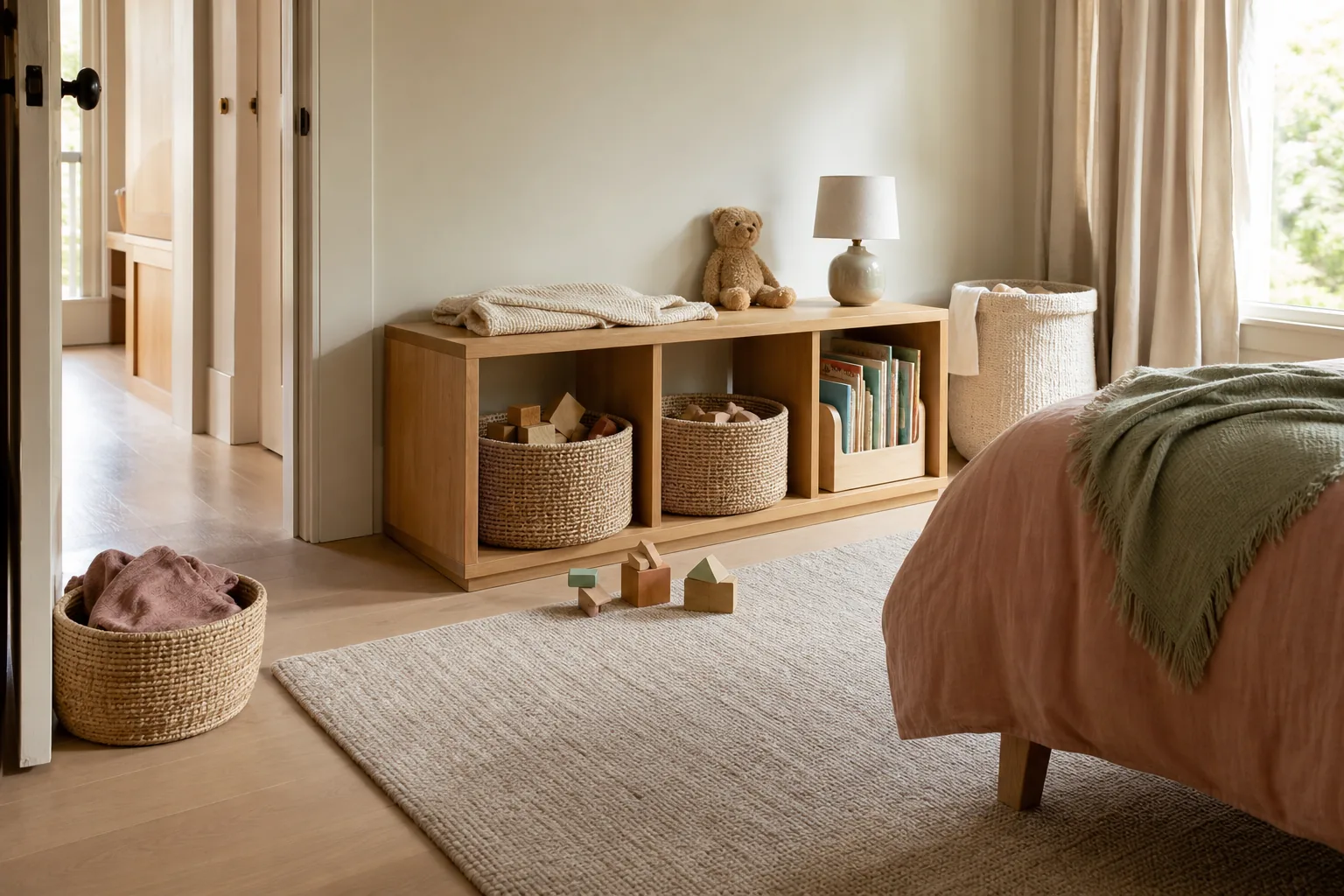
Kids spaces get loud when every item has to be decided again: where it belongs, who uses it, whether it stays, and how to clean it up.
Toy storage reset
Use fewer categories, visible containers, and one easy return path so cleanup does not require an adult-level sorting system.
Read the toy-storage guideFive-minute room reset
Give every visible item one child-reachable return path, then use the same short order for toys, books, clothes, trash, and the walking path.
Use the 5-minute checklistVisible morning route
Reduce repeated reminders with six visible steps from bedroom to door and one launch pad for the items that leave the house.
Build the morning routeNursery zones
Group baby basics by use: sleep, diapering, feeding, clothing, and outgrown items. This prevents nursery drawers from becoming one mixed pile.
Daily landing places
Backpacks, lunchboxes, school papers, library books, and sports items need one predictable place before they spread across counters and floors.
Start paper systemsKids Spaces guides
Daily resets and calmer decisions for kids’ spaces.
Choose the pressure point that is asking for the most decisions today. Each guide turns it into one small, repeatable family system.
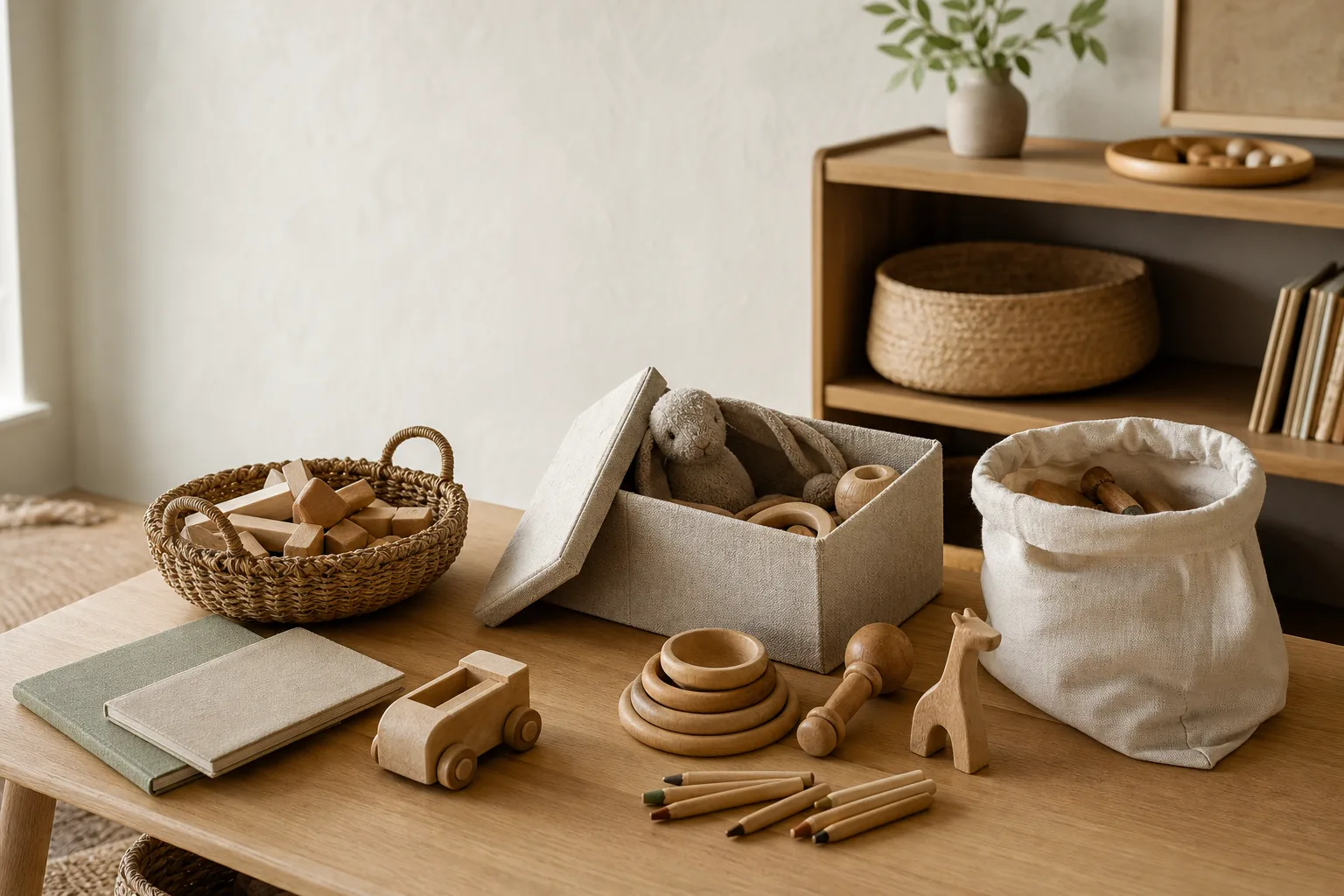
Declutter toys with a calm 12-item sort
Use one small batch and three clear destinations—Keep, Pause, and Release—without turning the whole room upside down.
Use the 12-item sort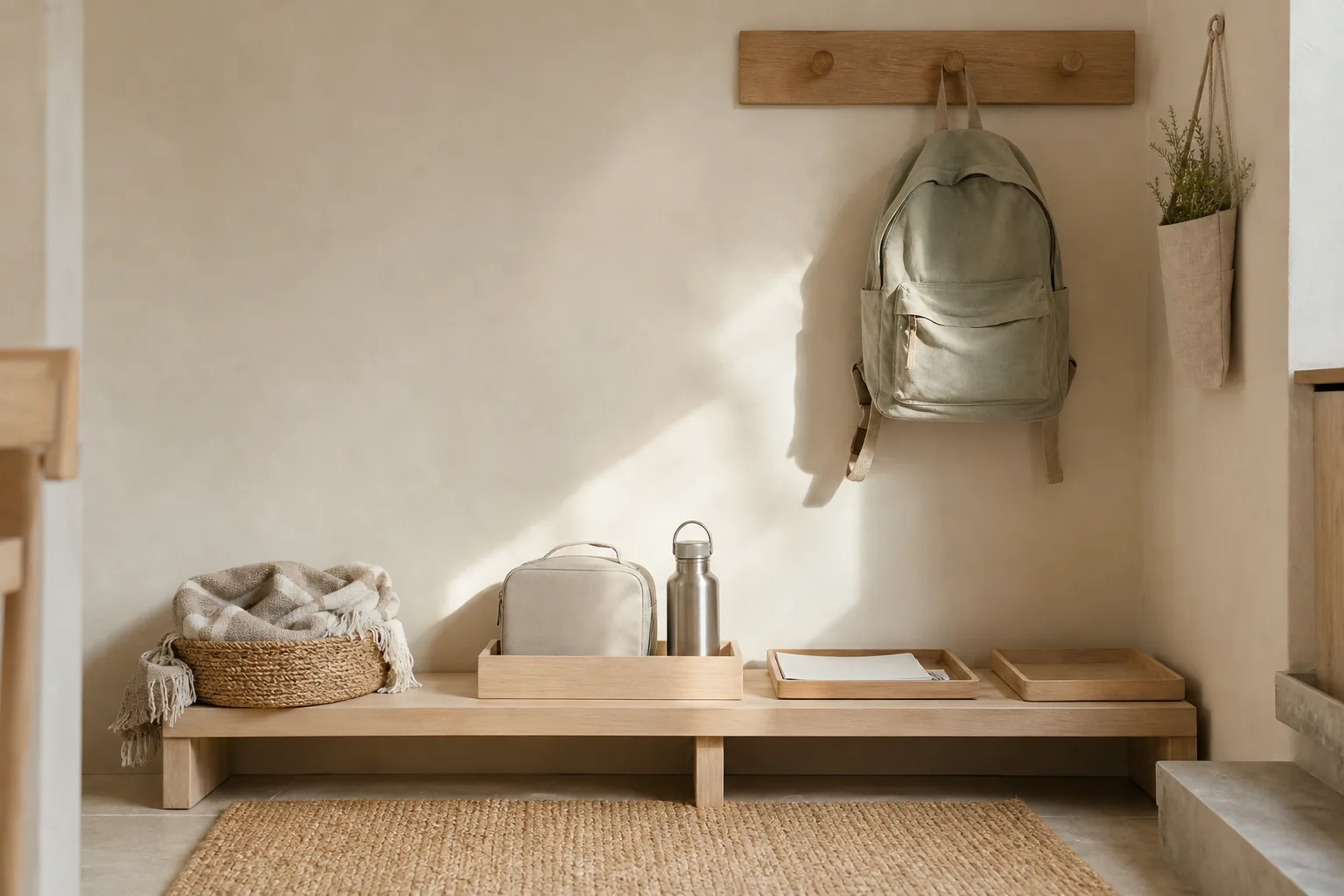
Build an after-school landing routine
Give backpacks, lunchboxes, papers, water bottles, and tomorrow’s things one visible next place after the door opens.
Build the landing steps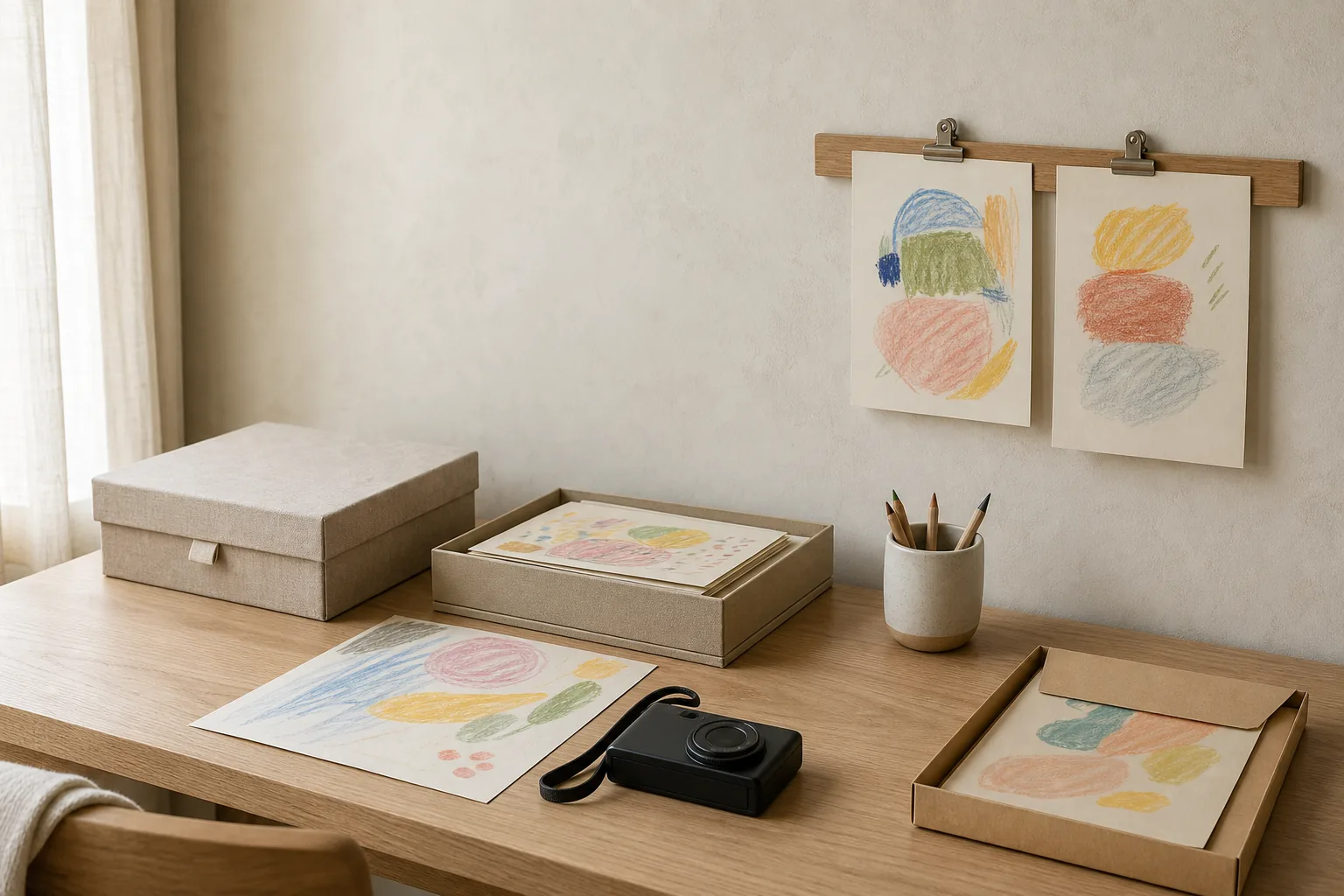
Decide what to do with kids’ artwork
Move each piece through four useful choices: Display, Save, Photograph, or Release, while protecting the originals that matter.
Use the artwork systemThe method
Declutter first. Then organize what is actually staying.
Buying more bins before decluttering usually creates organized clutter. Start by removing the items your family does not use, then choose storage that supports the remaining routine.
Keep categories broad.
Blocks, pretend play, books, art, soft toys, outdoor items. Broad categories are easier for kids to repeat.
Read decluttering guidesMake reset paths visible.
If a child cannot see where an item returns, the system probably asks too much. Visible homes beat perfect hidden storage. Choose optional tools only after the return path is clear.
Affiliate disclosure: As an Amazon Associate, Simple Home Rhythm may earn from qualifying purchases. There is no extra cost to you.
Free printable
Start with one small reset before changing the whole room.
The free 7-Day Calm Home Reset Checklist helps you choose one focus each day: toys, laundry, counters, meals, schedules, or visible noise. After signing up, check your inbox, spam, promotions, or updates folder for the PDF.