
Kids spaces · visible reset
The 5-Minute Kids’ Room Reset: A Cleanup Checklist Children Can See and Follow
“Clean your room” can hide dozens of decisions inside one sentence. This five-stop reset turns the job into a short, visible route a child can repeat with the level of help that fits today.
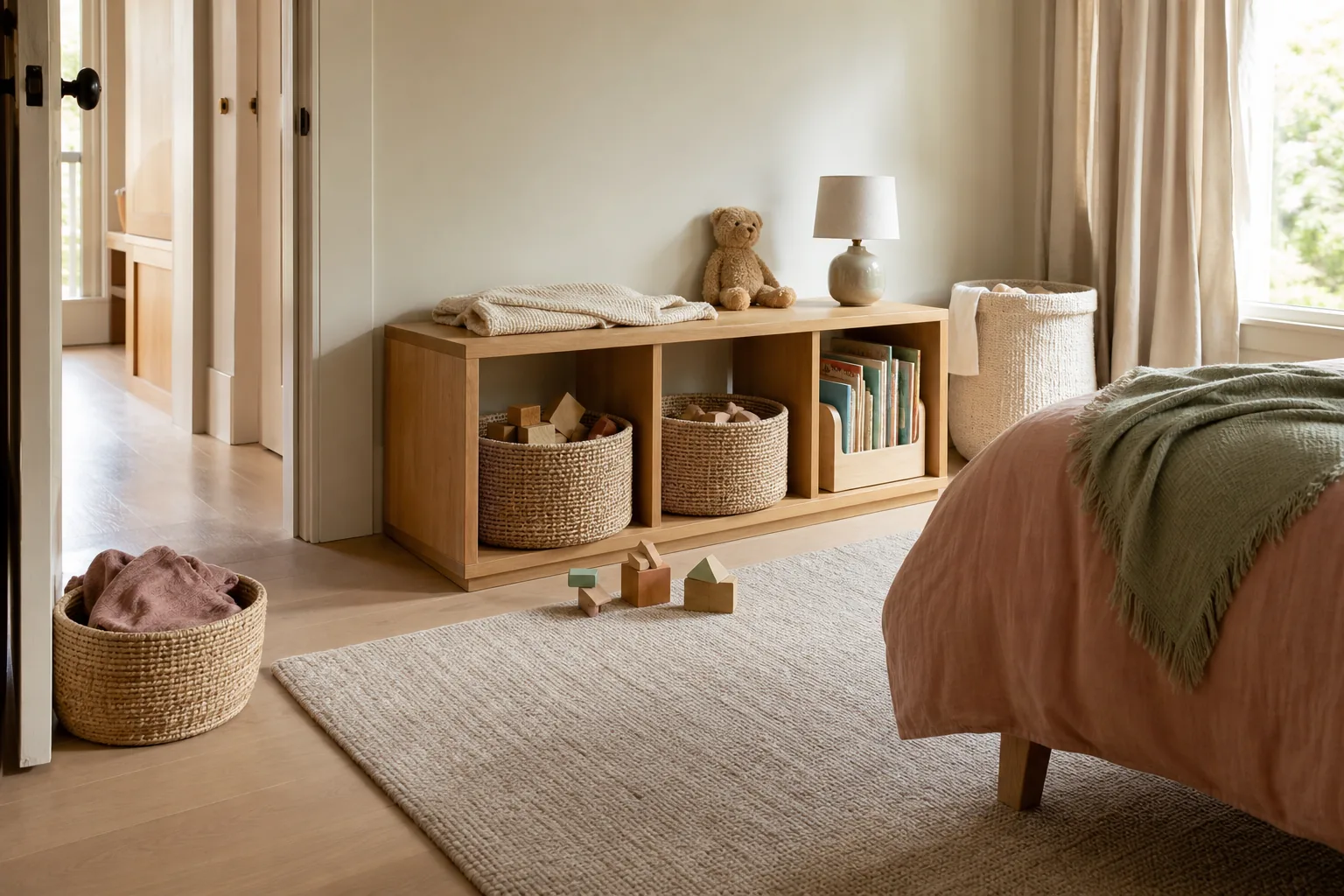
Make the job smaller before asking for independence.
A child can want a tidy room and still be unsure where to begin. One instruction may contain many separate choices: which objects count as toys, where the book belongs, whether the sweater is clean, and what to do with the half-built project.
The reset below is deliberately narrow. It is not a full room organization project and it is not a test of character. It is one short closing rhythm for the objects that appear most often.
Set up five visible destinations first.
Before using a timer, walk through the room and make sure each step has a real destination. Use broad homes rather than adult-sized subcategories. One book ledge, one hamper, one or two toy bins, and one place for comfort items are often easier to read than a wall of tiny labeled containers.
If toys are the main pressure point, use the broader category method in Toy Storage That Does Not Take Over the Living Room. The reset should return objects to a working system, not compensate for storage that is too full or too complicated.
The five-minute route
Return books to one shelf, ledge, or basket. Face-out books can be easier to spot; spines work when the child already uses them comfortably.
Dirty clothes go in the hamper. Clothes that are still being worn go on one hook or in one small “wear again” place chosen by the family.
Group by the way play happens—building, pretend play, vehicles, art—not by perfect sets. Put undecided pieces in one small “find its home” cup for the adult review.
Return the blanket, stuffed animals, bedtime book, and night-light controls to their agreed places. Keep the allowed group small enough to reset quickly.
Finish by making a safe, obvious route from the bed to the door. The timer can stop even if a longer project is still in progress.
The checklist children can see
Read or point to one line at a time. Stop when the route is complete.
- Books home
- Clothes in the hamper or wear-again place
- Toys in their broad bins
- Bedtime things back to bed
- Walking path clear
Make the checklist fit the child.
Use age ranges only as loose starting points. A pre-reader may follow one photograph or simple symbol at a time with an adult nearby. A child who reads comfortably may use the five written lines and mark the finish. An older child may need only the two steps that repeatedly stall.
Ability, energy, room-sharing, family routines, and the kind of day all matter. Some days the adult models each step; other days the child leads. Keep the destination consistent even when the amount of help changes.
If the reset keeps stopping, edit the system.
- The toy bin is full: pause the routine and reduce what is available before adding another container.
- The child crosses the room repeatedly: move the destination closer to where the item is used.
- Projects get swept into toy bins: give one active project a tray with a clear end date.
- The adult finishes every step: shrink the route to two visible wins, then add a step only when those feel steady.
- Shared rooms create conflict: give each child one personal return zone and keep common categories neutral.
Keep the room connected to the larger family rhythm.
Choose one dependable cue: before a bedtime story, before weekend screen time, or while the evening kitchen reset begins. Consistency matters more than the exact clock time.
For more child-reachable organizing ideas, visit the Kids Spaces hub. If you are setting up a younger child’s room, the calm nursery guide uses the same principle: create practical zones first and leave room for the system to change.
Leave a Reply