Kids spaces
A realistic toy reset for busy family homes where toys move into shared spaces, but the room still needs to feel calm.
Toys in the living room are not a failure. They are information.
If toys keep returning to the living room, that room is part of family life. The goal is not to pretend children do not live there. The goal is to make cleanup visible, easy, and calm enough to repeat. For the wider room-by-room approach, start with Kids Spaces, then keep this living-room system intentionally simple.
A toy system should answer: what belongs here, what goes back to the bedroom or playroom, and what has been outgrown?
Start by choosing the toys that are allowed to live there
Do not start with bins. Start with limits. Choose a few categories that make sense in the room: books, blocks, soft toys, pretend play, or one current favorite activity.
Everything else can live in a bedroom, playroom, closet, or rotation bin. This is not about having fewer toys forever. It is about fewer toys asking for attention in the same room at the same time.
The living room toy reset
Notice the toys that naturally migrate into the shared space.
Do a quick edit before choosing storage.
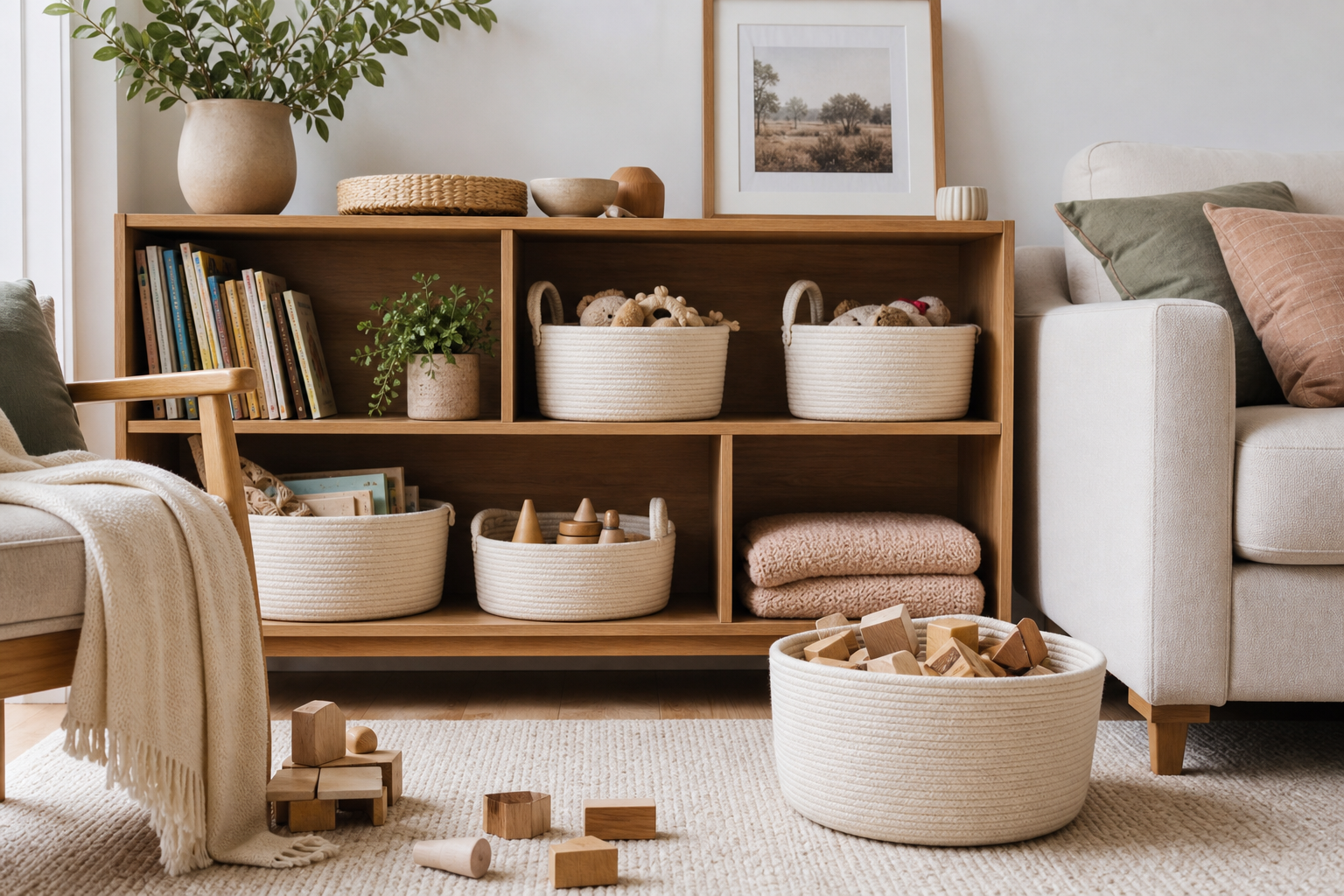
One basket for books, one for soft toys, one for current favorites.
Evening cleanup works better when the destination is obvious.
When toys need to move from “out” to “done,” use the 5-minute kids’ room reset as the repeatable finish for this system.
What to avoid
- Too many small bins with narrow labels.
- Bright storage that visually adds more noise to the room.
- Hidden storage that children cannot access.
- Keeping every toy in the main living area because cleanup feels easier in the moment.
The calmer test
Look at the room after the reset. Does it feel like family life with a place to return to, or does it still feel like every toy is asking for attention? The right answer is not perfect. It is lighter.
Choose storage kids can actually use.
Soft bins and broad categories usually work better than tiny sorting systems that only adults can maintain.
See toy storage findsFree printable
Start with one calm reset.
Download the free 7-Day Calm Home Reset Checklist and choose one small zone instead of trying to fix the whole house at once. After signing up, check your inbox, spam, promotions, or updates folder.
Leave a Reply