Family routines · arrival route
The After-School Reset: 5 Landing Steps for Backpacks, Lunchboxes, and Papers
Give each after-school handoff one nearby destination: land the bag, reconnect and refuel, empty what cannot wait, route the papers, and stage only what tomorrow needs.
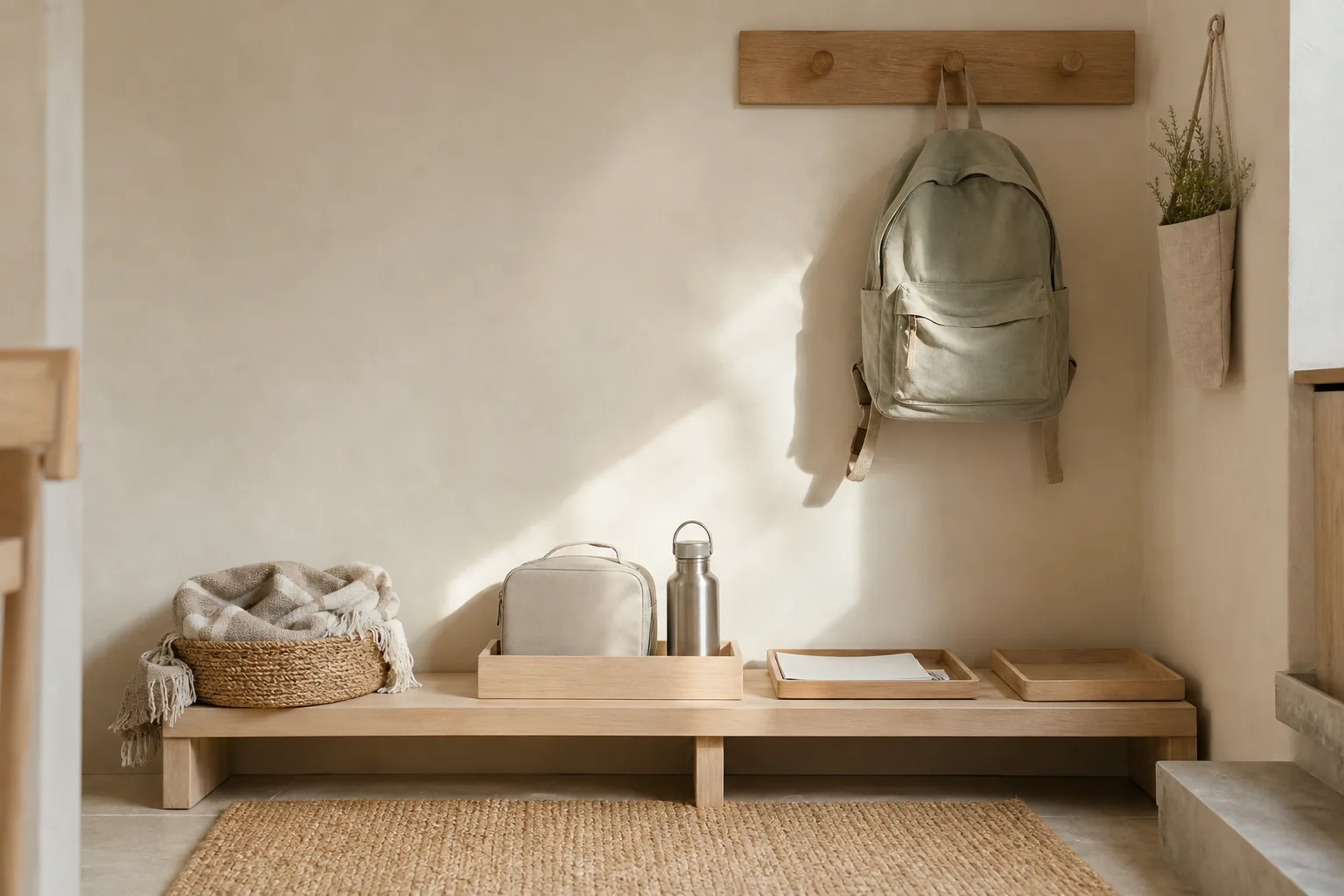
Build an arrival route, not one overloaded drop zone.
A backpack lands near the door, food containers need the kitchen, a school notice needs an adult decision, and tomorrow’s library book may belong back in the bag. One basket cannot complete all of those jobs. The useful system is a short route between the places where the next actions already happen.
HealthyChildren, from the American Academy of Pediatrics, recommends one consistent launch pad for backpacks, lunchboxes, shoes, jackets, and school projects. This article extends that idea into an arrival route. It is a household workflow, not a promise that every afternoon will be calm or reminder-free.
Prepare four destinations before school pickup.
- Bag hook or shelf: reachable, stable, and close to the usual entrance.
- Kitchen return point: for lunch containers, bottles, and anything that needs washing, cooling, or disposal.
- Parent paper inbox: one narrow tray for papers that require an adult decision.
- Tomorrow place: one basket, hook, or shelf for the items that must rejoin the bag.
If the entrance already collects adult bags, keys, shoes, and mail, use the boundaries in the entryway drop-zone guide rather than expanding the child’s station across the room.
The five after-school landing steps
Put the backpack on its hook or shelf and shoes in their normal home. The first step contains the bulky items without asking the child to unpack immediately.
Pause for the family’s normal greeting, snack, water, or transition. The exact sequence belongs to the household; the route does not need to turn the first minute home into an inspection.
Move the lunchbox, water bottle, leftover food, wet clothing, and temperature-sensitive items to the correct kitchen or laundry destination.
Put adult-action papers in one inbox. Recycle routine notices only after the household has finished with them, and move finished work to the family’s artwork or archive decision route.
Return the empty bag to its home and place only confirmed tomorrow items in the tomorrow spot. Do not pack from memory if a school list or schedule says something different.
The five-line arrival checklist
Keep the words short and put each cue where its action happens.
- Land bag and shoes
- Reconnect and refuel
- Lunchbox, bottle, and wet things out
- Papers to the parent inbox
- Bag home; tomorrow items staged
Give papers three adult decisions.
The child’s job can end at the parent inbox. During the adult review, route each paper to Action, Keep, or Recycle. Action needs a date or next step. Keep needs a real file or archive home. Recycle follows local rules after the information is no longer needed.
Use the fuller workflow on the Paper Clutter page when the inbox is already overflowing. A simple family command center can hold the current schedule and adult-action papers, but it should not become a display wall for every sheet that enters the home.
Keep backpack weight and fit separate from organization.
A tidy backpack is not automatically a safely fitted backpack. HealthyChildren advises using both shoulder straps, adjusting the pack close to the body, and checking that the loaded weight is appropriate for the child. Ask the child’s health professional for individual guidance if carrying the bag causes pain, tingling, numbness, or difficulty.
The after-school reset can remove yesterday’s trash and unneeded papers, but it does not replace backpack fitting or medical advice.
Use the same destinations in the morning.
The arrival route should hand items to the six-step morning route. The bag returns to the same hook, adult-approved papers enter the bag or tomorrow place, and shoes remain near the exit. When morning and afternoon systems use different homes, the family has to translate between them every day.
CDC parenting guidance describes predictable routines as sequences children can expect. That supports using the same order and destinations; it does not mean a routine will remove every delay or disagreement.
Review the route once a week.
Empty every backpack pocket, remove old food and trash, return stray household items, and check the coming week. If the paper tray is full, hold the paper review before adding another inbox. If tomorrow’s basket holds last month’s items, reduce it to only the next departure.
Change one bottleneck at a time. A lunchbox abandoned in the entry may need a closer visual cue; papers missed by the adult may need a smaller, more visible inbox. More containers are useful only when the destination and next action are already clear.
Sources and scope
These sources support the narrow guidance noted below. The household methods and stopping points in this article are Simple Home Rhythm frameworks, not clinical or developmental prescriptions.
- HealthyChildren — Ten Tips for Your Child’s Success in School — A consistent launch pad and a weekly backpack clear-out.
- HealthyChildren — Backpack Safety — Backpack fit, both shoulder straps, load, and symptoms that need individual guidance.
- CDC — Structure and Rules — General guidance on predictable routines and consistent sequences.
Leave a Reply