
Family routines
How to build a useful command center for schedules, papers, meals, keys, school forms, and the family decisions that usually live in your head.
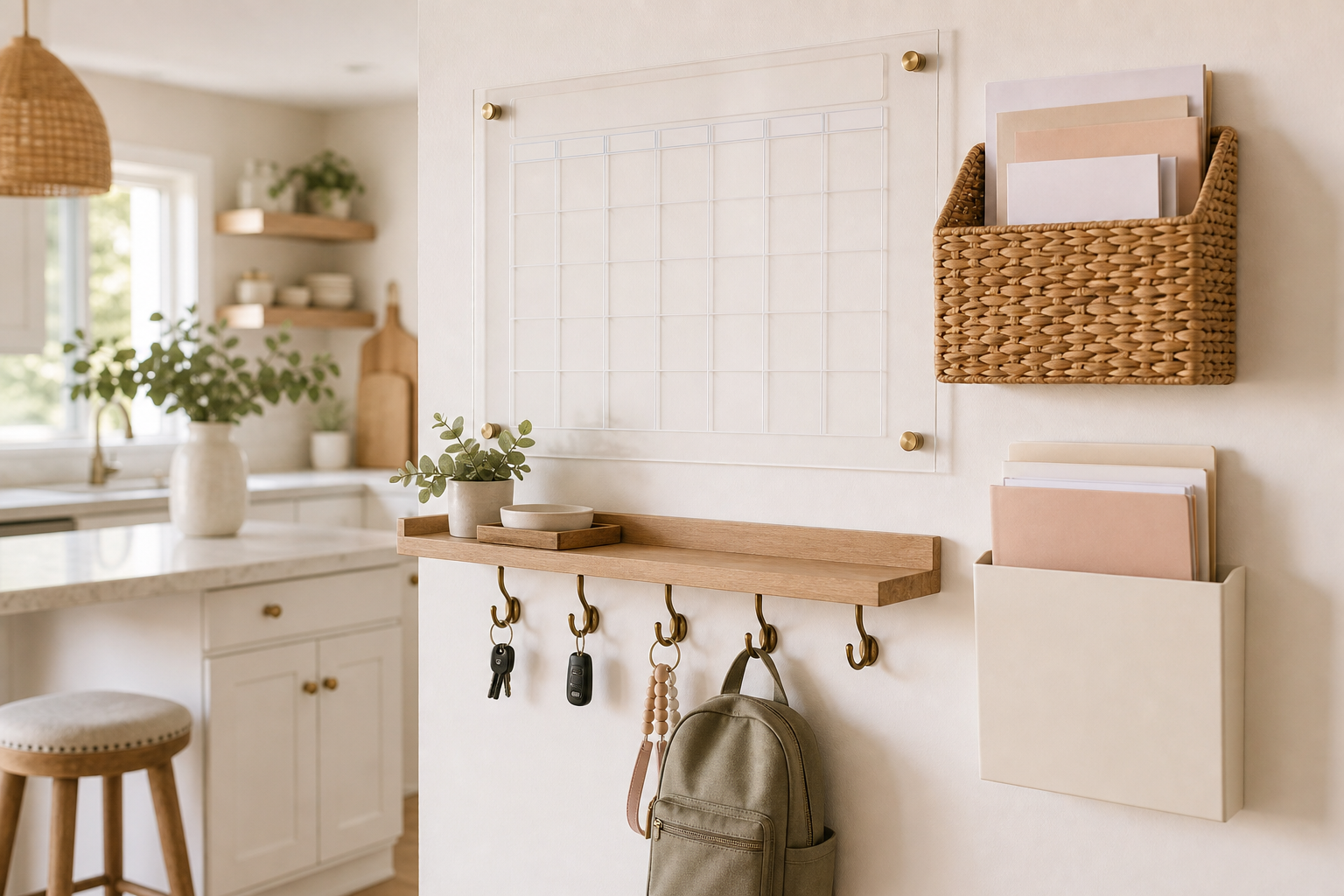
A command center is only useful if it changes what you have to remember.
Many command centers look beautiful but do not reduce mental load. They hold a calendar, a few labels, maybe a basket, but the real decisions still live in one person’s head.
A useful command center is not a wall of decor. It is a place where family information becomes visible enough to act on.
The four parts of a working command center
Appointments, school dates, activities, deadlines, and the week’s pressure points.
Forms to sign, invitations, bills, returns, and papers that need a decision.
Keys, lanyards, library books, return bags, and anything that needs to go out.
Simple dinner plans, lunch reminders, weekly resets, or one family checklist.
Do not build it around products first
Start by writing down what you keep remembering for everyone. Those are the things the command center needs to hold. Then choose the pieces that support those categories.
Where to place it
Put it where family information already passes: near the kitchen, entryway, mudroom, or the wall beside the family calendar. The best location is the place you will actually see during the week.
Weekly command center reset
- Clear papers that no longer need action.
- Move dates from emails or school apps onto the calendar.
- Check what needs to leave the house this week.
- Choose one meal or routine note that would make mornings easier.
A good command center does not make family life perfect. It makes the invisible work easier to see, share, and repeat.
A command center should lower mental load.
A calendar or wall file helps when it holds real decisions, not just pretty labels.
See command center findsFree printable
Start with one calm reset.
Download the free 7-Day Calm Home Reset Checklist and choose one small zone instead of trying to fix the whole house at once. After signing up, check your inbox, spam, promotions, or updates folder.
Leave a Reply